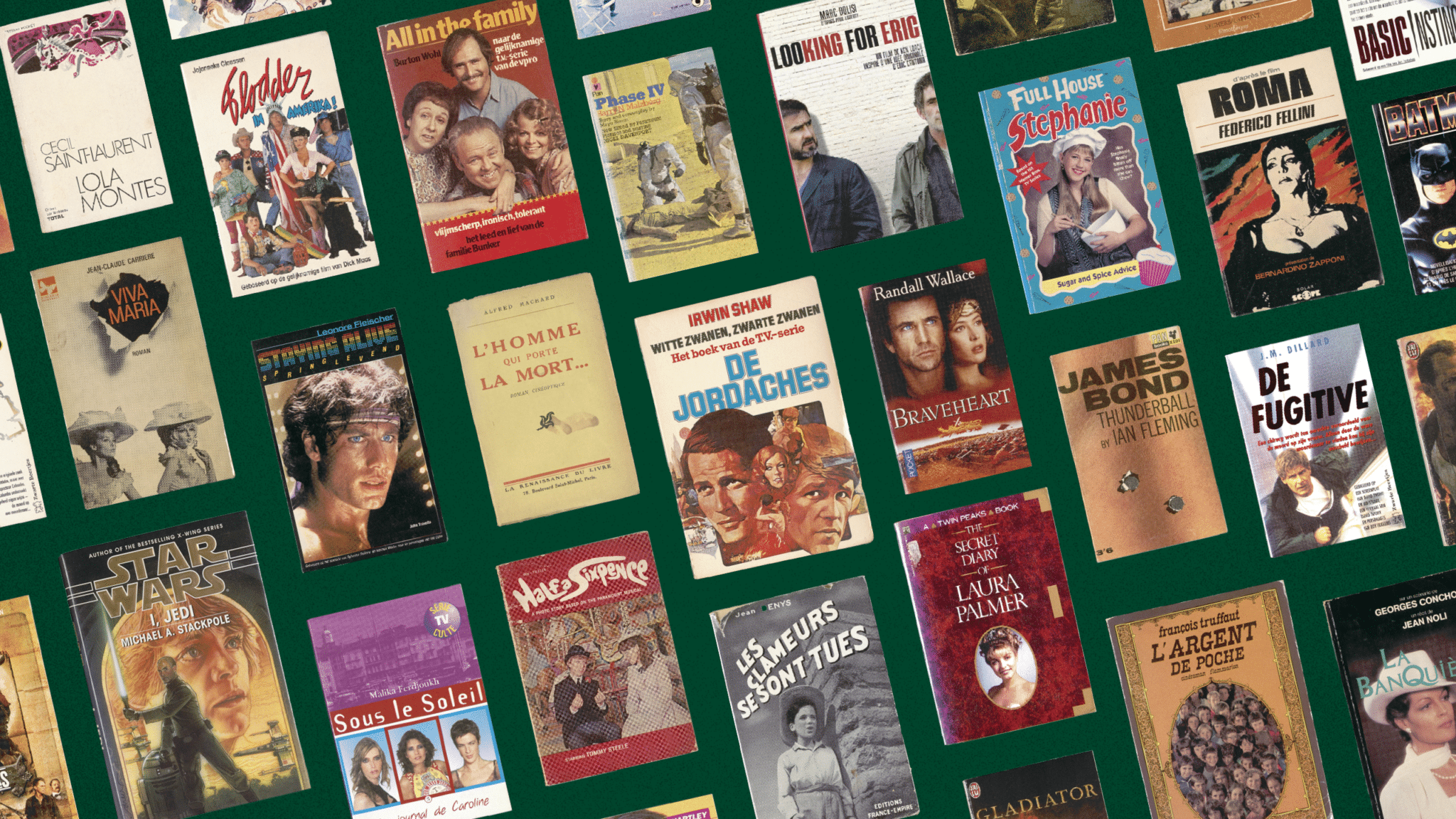
KBR recently welcomed a unique collection of novelisations, donated to the library by Jan Baetens, professor emeritus of Cultural Studies at KU Leuven, a French-language poet and writer, and a world-renowned expert on this “minor” genre.
While the vast majority of films today are still adapted from literature, the reverse process is less well known. Yet many films are adapted into novels, often as soon as they are released. This is what is known as a novelisation: a novel whose story faithfully follows the plot of an existing film.
Collecting novelisations
Equally passionate about highbrow literature and lowbrow genres, Jan Baetens’ research has largely contributed to the rediscovery of this still little-known type of adaptation. Given the dearth of existing archives and collections for this specific genre, he had to assemble his own collection of more than 600 titles in various languages (primarily French, English, and Dutch). This collection offers a glimpse into this mass-market production, spanning from the 1920s to the 2000s and reflecting various publishing formats.
Jan Baetens donated this collection to KBR in 2025, and it has now been inventoried, catalogued, and made available for consultation.
A brief introduction to the collection can be found in this interview with Jan Baetens, conducted by Lizzy Burt during an internship at KBR as part of the PopHeritage project.
Video credits: Lizzy Burt
A lowbrow genre?
Often seen as purely commercial products, novelisations are situated on the lower ends of the cultural hierarchies and are largely shaped by mass-market dynamics: produced serially in inexpensive formats (brochures, paperbacks) and distributed more often through newsstands or supermarkets than bookstores, they also reflect the growing importance of transmedia circulation in the postwar period.
Novelisation nevertheless covers a broad range of writing and adaptation practices and serves a variety of functions for its readers. It therefore provides an important lens through which to examine the changing relationship between literature and cinema. In recent years, novelisations have also gained ground in more canonical areas of literature, such as poetry. Public and institutional actors within the literary field have likewise been paying increasing attention to these forms of production.
Making novelisations discoverable
The singularity of this collection not only has to do with the possible rarity of its individual titles, but also with a greater lack of awareness of the genre: indeed, very few institutions identify novelisations as such. As a result, these books have limited visibility in catalogues, both in libraries and film archives.
The works in the collection have been clearly labelled as “novelisation,” in accordance with the FAST controlled vocabulary recently implemented at KBR. This indexing helps improve the discoverability and interoperability of metadata. The new collection therefore represents not only a rare sample of a kind of mass culture that has been poorly preserved, but also contributes to a greater visibility of the genre within library catalogues and search engines.
A spotlight on KBR’s collections
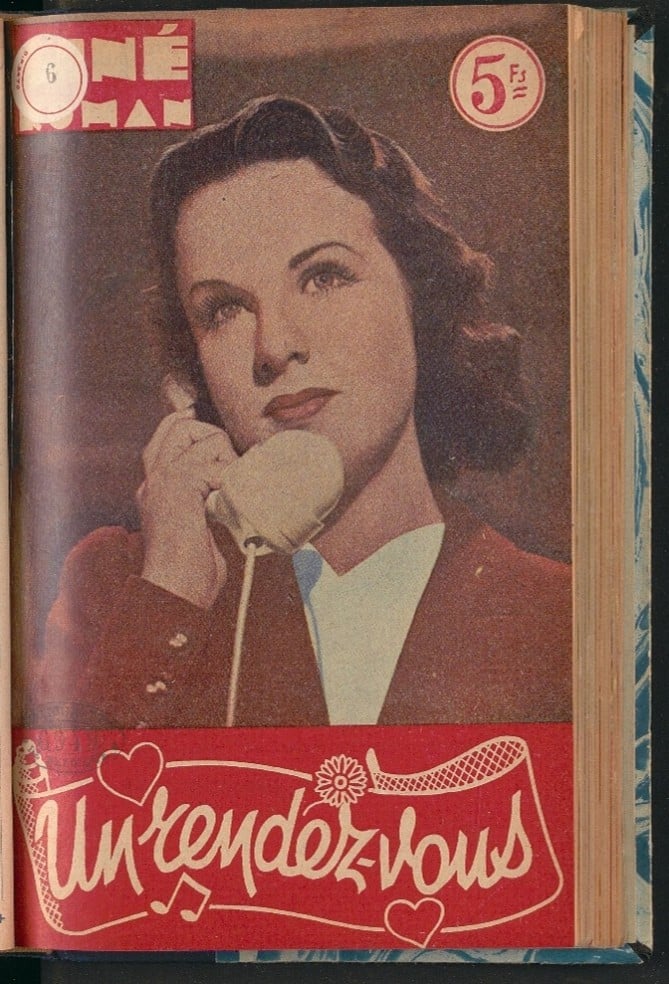
This donation further casts another light on KBR’s collections, particularly its Contemporary Printed Books collection. These already include numerous forms of novelisation that have yet to be fully identified: film-novels published in installments in interwar film magazines such as Le Film; postwar series of popular booklets such as Ciné-Roman; and more recent forms of novelisation characteristic of contemporary transmedia cultures, such as video game novelisations. The donation thus represents a first step towards rediscovering collections that have so far received little attention, and hence contributes to the goals of the FED-tWIN PopHeritage project, which supports engagement with KBR’s non-canonical collections and mass-produced print materials.
Un rendez-vous, issue 6 of Ciné-Roman (Bruxelles?: La Concorde, 1945), novelisation of the musical comedy It’s a Date (Universal, 1940), directed by William A. Seiter with Deanna Durbin as lead actress.
KBR, Contemporary Printed Books, B 6949.