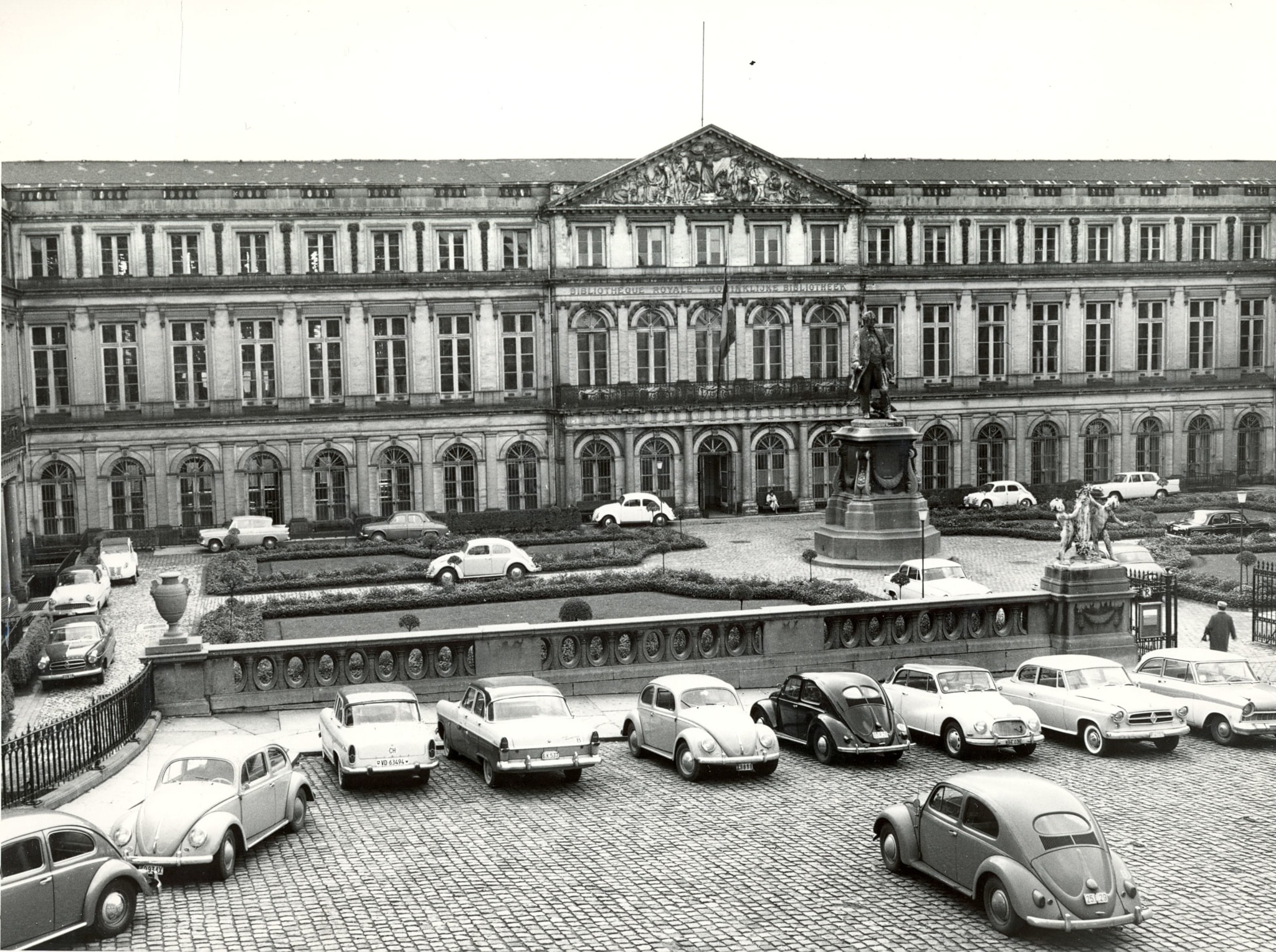
KBR has a long and distinguished history. The name KBR originally emerged as a contraction of its two bilingual names: Koninklijke Bibliotheek and Bibliothèque royale.
Historical timeline
- XVth century: The Dukes of Burgundy assembled a unique collection of illuminated manuscripts: the Library of the Dukes of Burgundy, which comprised around 900 volumes at the time of Philip the Good’s death.
- 1559 : Philip II brought together all the books in his possession at the Coudenberg Palace. From then on, the collection became known as the Royal Library.
- 1731 : A fire destroyed the Coudenberg Palace. Fortunately, most of the manuscripts were saved.
- 1746 : During the French occupation of Brussels, many manuscripts were taken to Paris. Some of them were returned in 1770.
- 1754 : The collections were moved to the Domus Isabellae, the former headquarters of the Crossbowmen’s Guild, located on what is now ‘rue Baron Horta’.
- 1772 : The Library is open to the public.
- 1794 : Many manuscripts and other precious books were taken to Paris by agents of the French government. Some of these works were returned to Belgium following the Congress of Vienna in 1815.
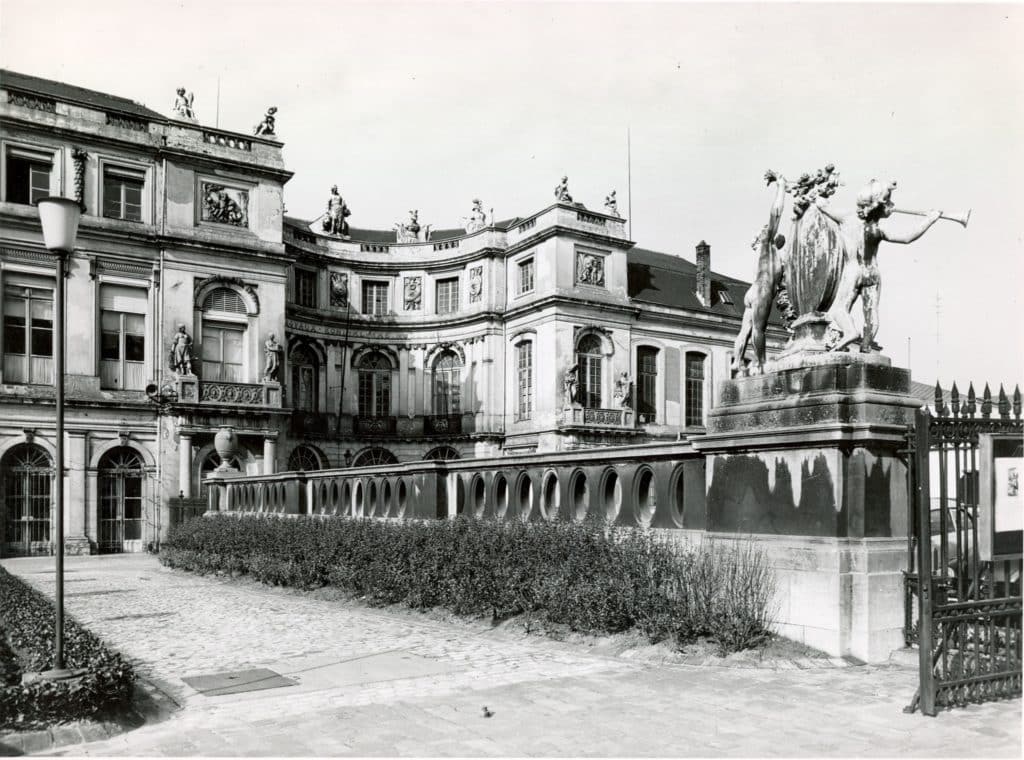
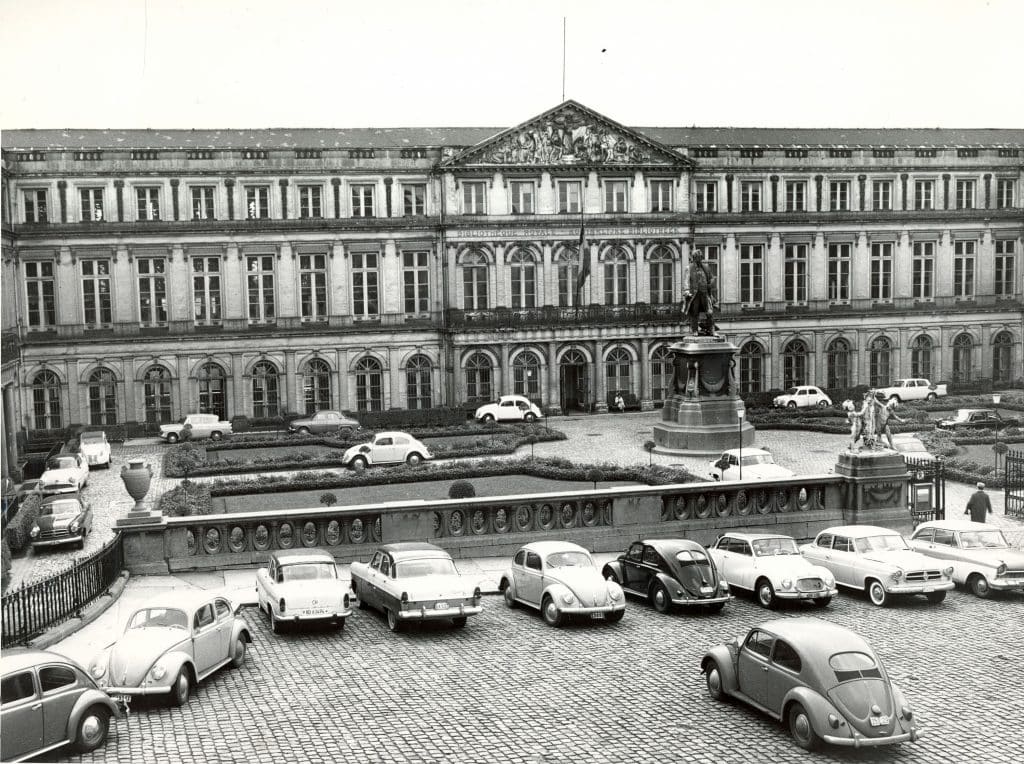
- 1795 : The Library became part of the Central School of the Department of the Dyle. The collections were moved to the buildings of the former Court, including Charles of Lorraine’s Palace on what is now Place du Musée.
- 1803 : Ownership of the Library was transferred to the City of Brussels.
- 1815 : The government of the United Kingdom of the Netherlands split the Library into two. The manuscripts once again became state property under the name Library of Burgundy, while the city retained ownership of the printed books until transferring them to the state in 1842.
- 19th of June 1837 : Following the Belgian State’s acquisition of the 70,000-volume collection of the renowned Ghent bibliophile Charles Van Hulthem, the government established the Royal Library of Belgium.
- 21st of May 1839 : The Royal Library opened to the public in the left wing of the Palace of Industry, a 19th-century extension to Charles of Lorraine’s Palace.
- 1878-1881 : A third wing was built, linking the left wing of the Palace of Industry to Rue du Musée.
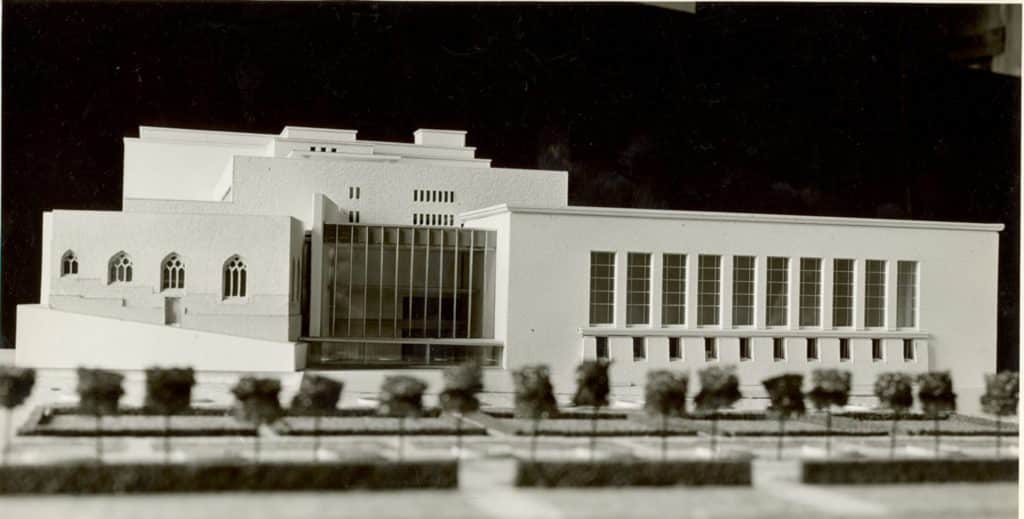
- 1935 : At the request of Queen Elisabeth and King Leopold III, the Belgian government decided to build a new library in memory of King Albert I. The building was designed by the modernist architect Maurice Houyoux.
- 1954 : The foundation stone of the Royal Library Albert I was laid by His Majesty King Baudouin I.
- 17th of February 1969 : The Royal Library Albert I was officially inaugurated.
- 2019: The Royal Library of Belgium was rebranded as KBR.
- 2020: The KBR museum opens. The Library of the Dukes of Burgundy, the historic core of KBR’s collection, is presented to the public through a unique museum experience.
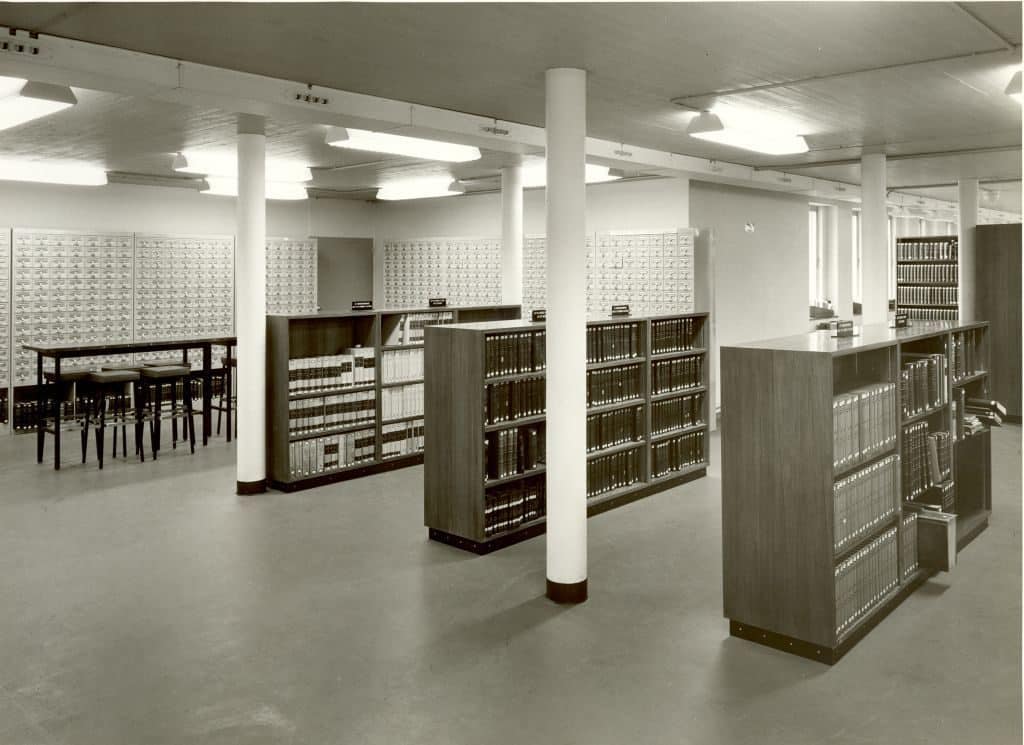
The KBR building
Built between 1954 and 1969 to the designs of architects Maurice Houyoux, Roland Delers and Jacques Bellemans, KBR forms one side of the Mont des Arts complex.
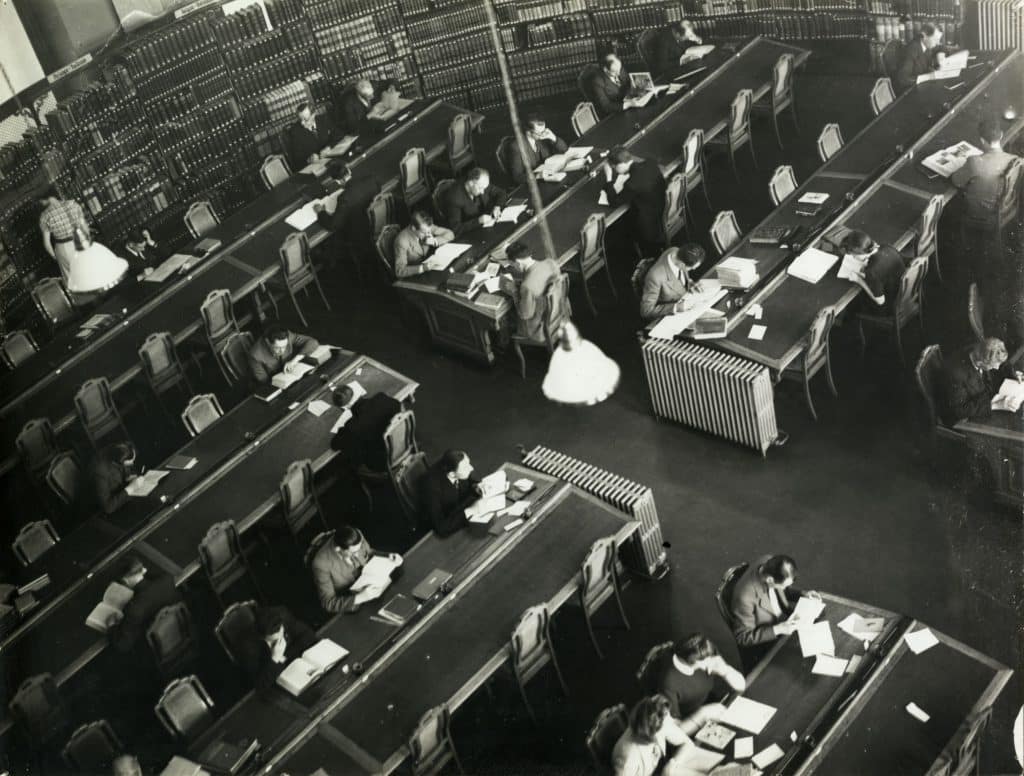
KBR stands on a site of 13,000 m², but its many levels and floors provide a total usable area of 67,000 m². Its construction required 28,000 m³ of reinforced concrete and 3,000 tonnes of steel and structural beams. The public areas used by readers cover 8,000 m² and provide seating for 1,100 visitors.
The storage facilities house approximately 150 km of shelving, spread across the 17 levels of the Book Tower (six basement levels, a ground floor and ten upper floors). Only levels -5 and -6 are equipped with compact mobile shelving.
Chief conservators
| 1837-1850 | Baron Frédéric de Reiffenberg |
| 1850-1887 | Louis-Joseph Alvin |
| 1887-1904 | Edouard Fétis |
| 1904-1909 | Henri Hymans |
| 1909-1912 | Joseph Van Den Gheyn, S.J. |
| 1913-1914 | Dom Ursmer Berlière O.S.B. |
| 1919-1929 | Louis Paris |
| 1929-1943 | Victor Tourneur |
| 1944-1953 | Frédéric Lyna |
| 1953-1955 | Marcel Hoc |
| 1956-1973 | Herman Liebaers |
| 1973-1990 | Martin Wittek |
| 1990-1991 | Denise De Weerdt |
| 1992 | Josiane Roelants-Abraham |
| 1992-2002 | Pierre Cockshaw |
| 2002-2005 | Raphaël De Smedt |
Directors
- Patrick Lefèvre : 2005 – 2017
- Sara Lammens : 2017 –