What does the restoration workshop do?
Not all items in KBR’s collections are in perfect condition. Many historical documents have been stored in less-than-ideal conditions over the centuries. In the restoration workshop, books, manuscripts, prints, posters, drawings and other documents are conserved and restored to ensure their long-term preservation.
Our mission is to ensure that damaged documents remain accessible and available for consultation. To achieve this, they work on three levels:
- Preventive conservation
- Remedial conservation
- Restoration
These interventions take place before the items are transferred to the storage areas, where they will be preserved, or before they are put on display.
Overview of our restoration projects


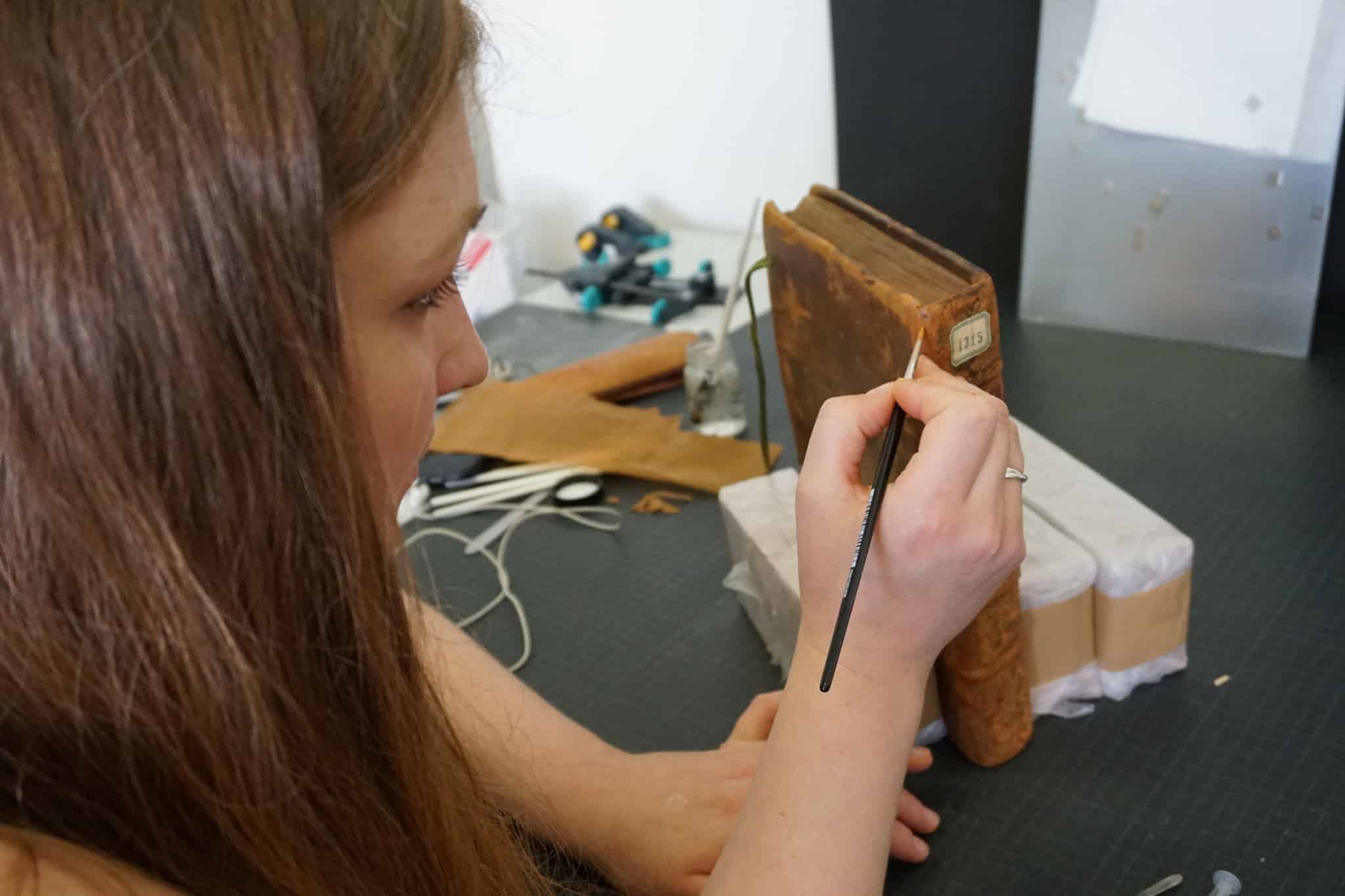
Custom treatment
The restoration workshop is in charge of the conservation and restoration of our patrimonial collections:
Each item is treated and conserved according to its condition and its historical, technical and artistic characteristics.
Other dedicated workspaces are used for dust removal, rehousing and quarantine.
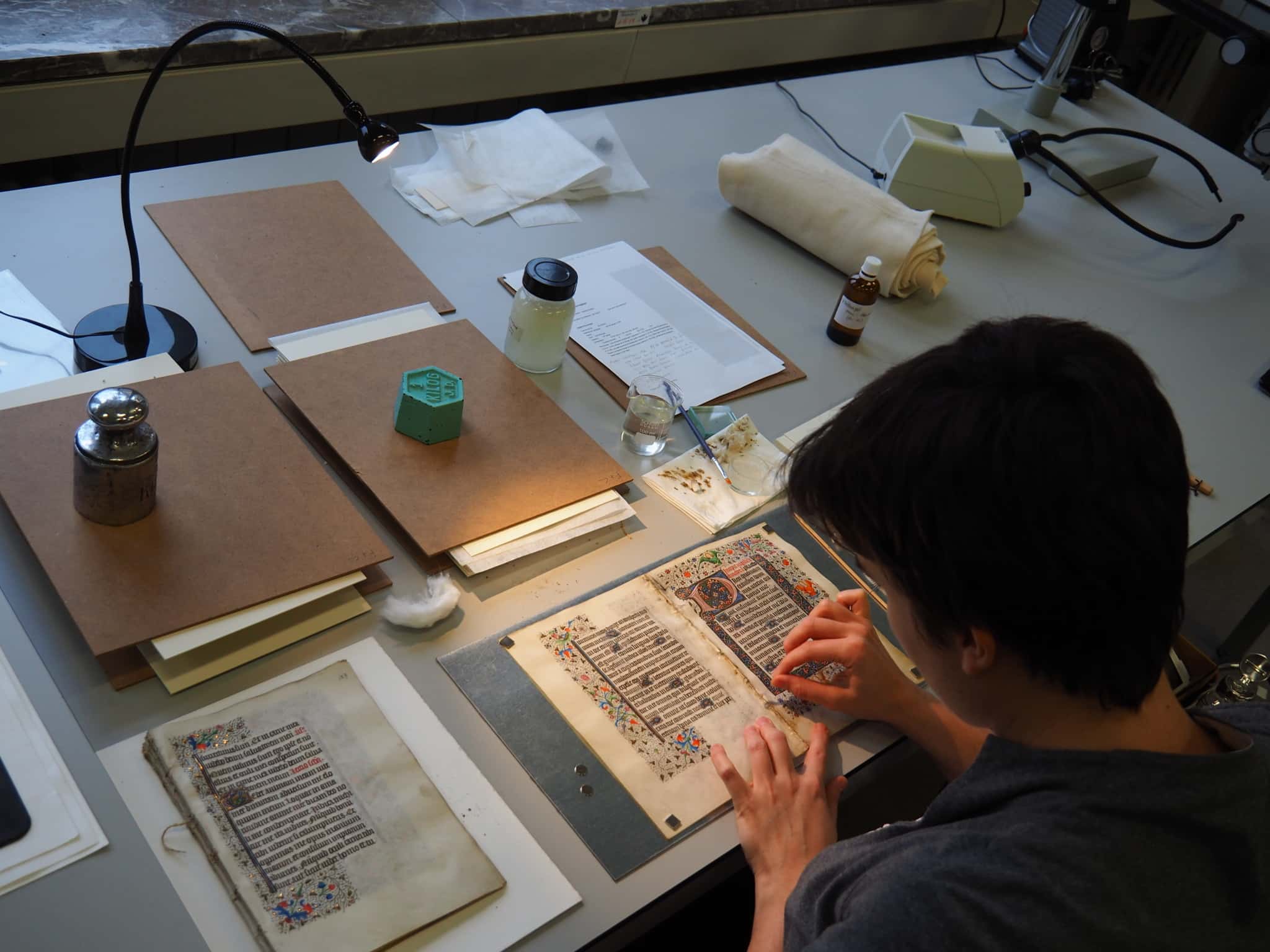
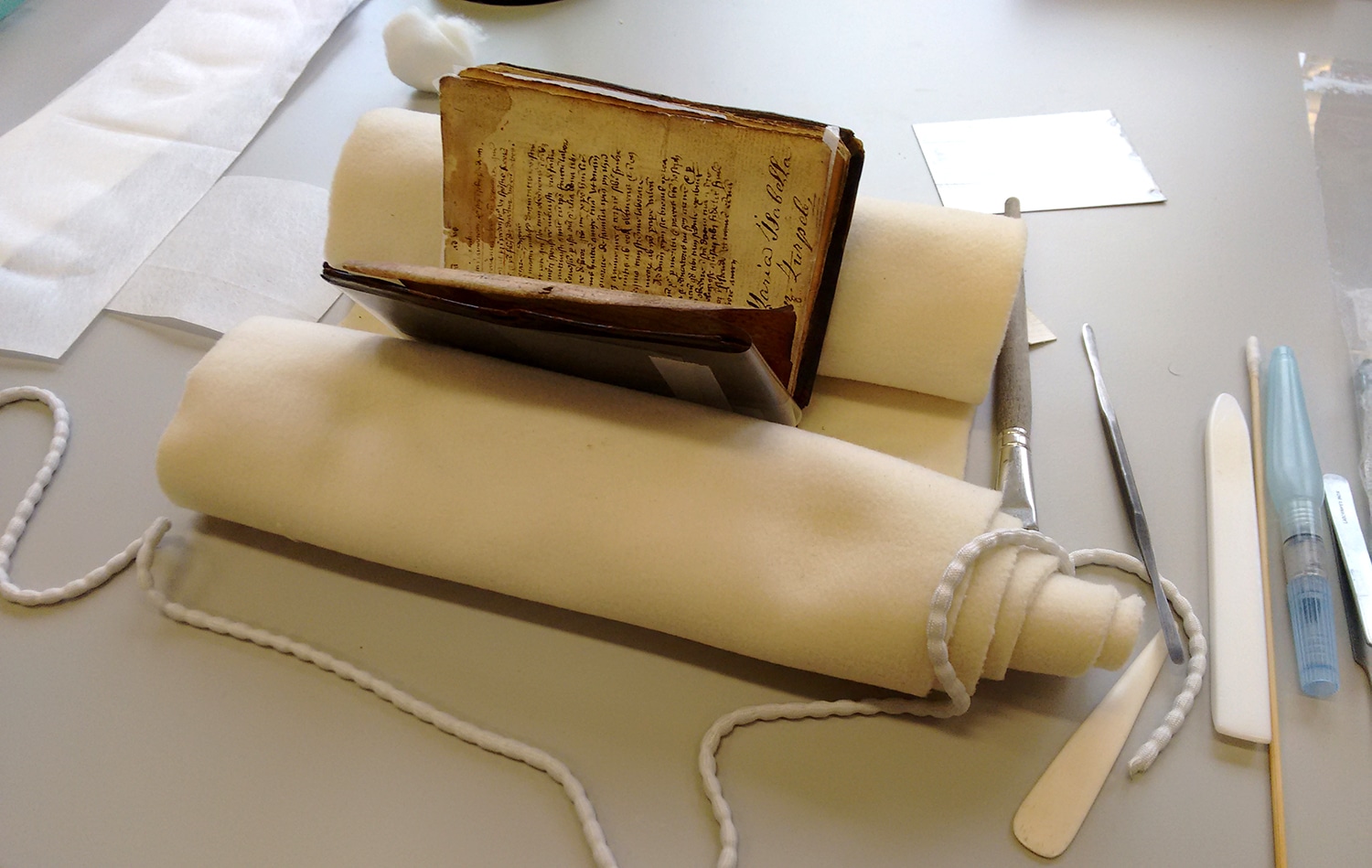
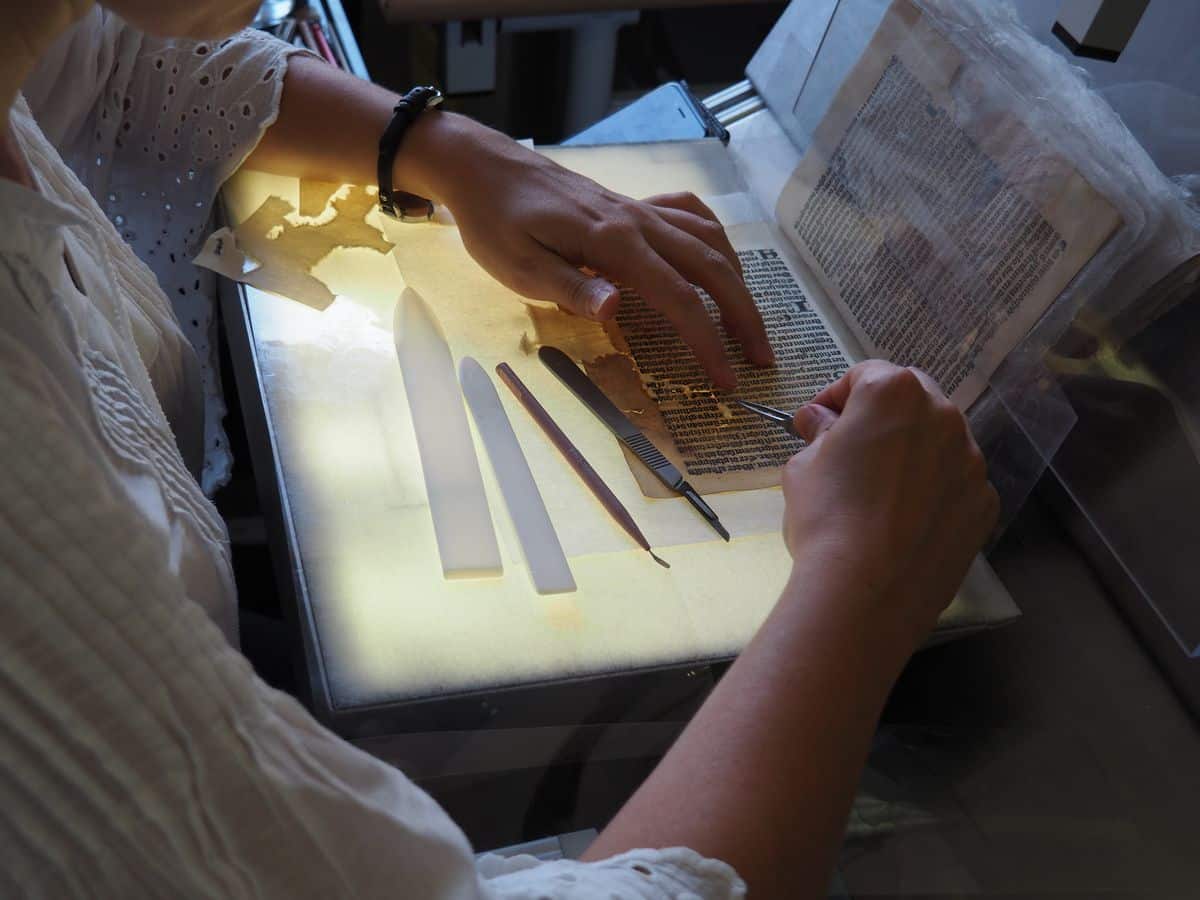
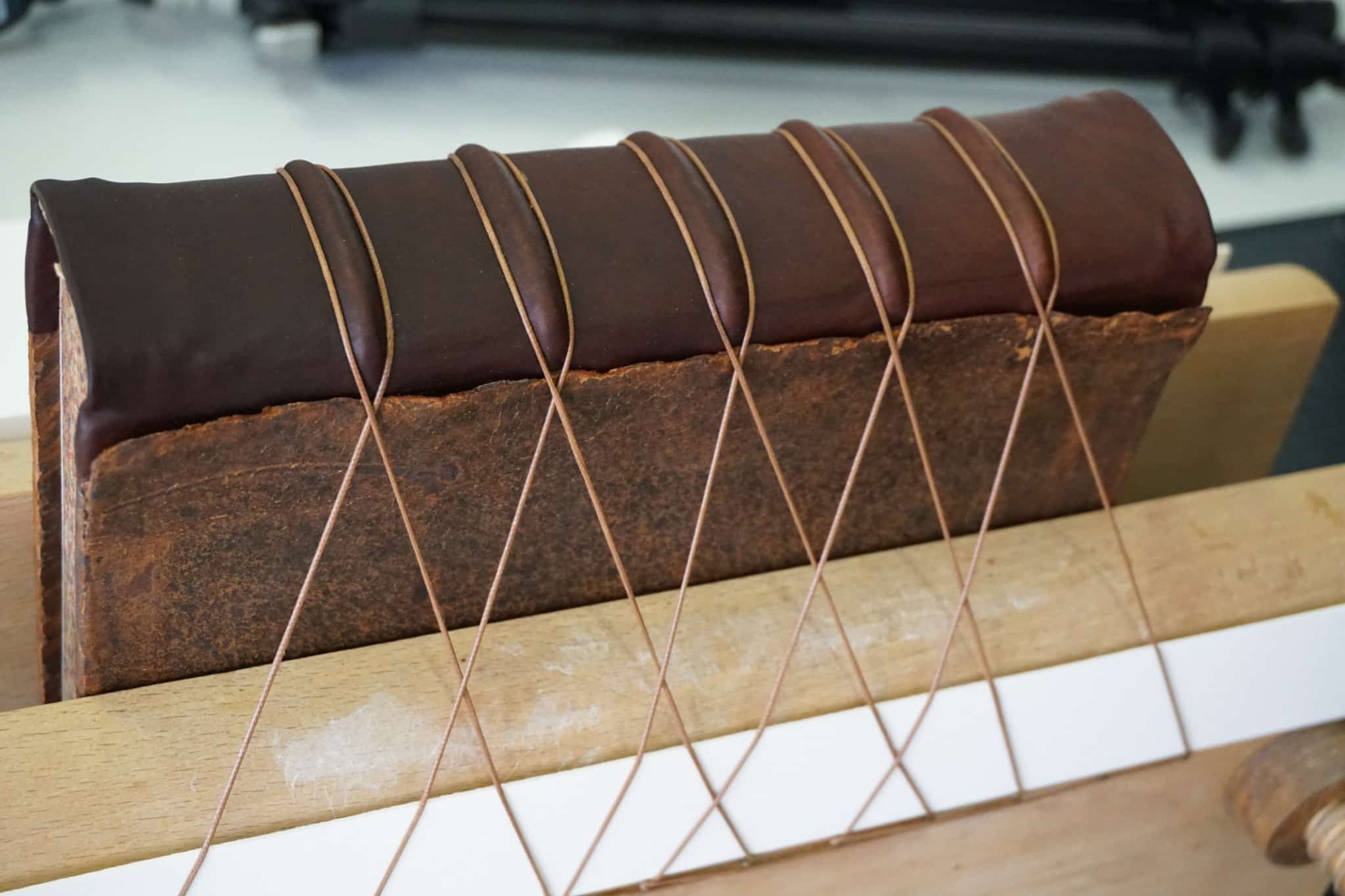
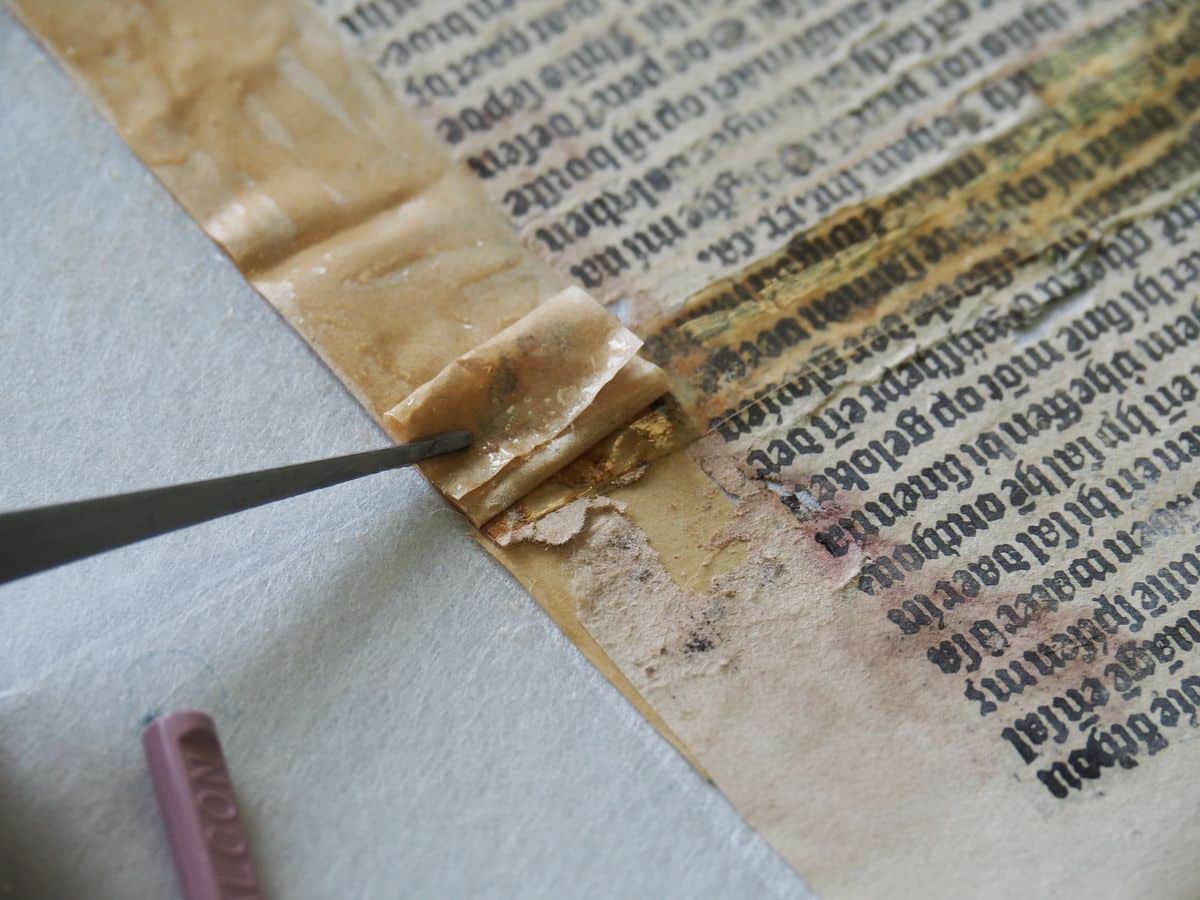
Priorities
The priorities in terms of restoration are established based on three key criterias:
- whether the item is scheduled for display or loan (for exhibitions at KBR or external loans);
- the frequency with which the item is consulted;
- the item’s value.
The restoration process
1. Examination and condition assessment
The first step before any conservation treatment is a condition assessment, which helps conservators understand the item’s composition, the nature of its deterioration and the causes of any damage. For particularly complex treatments or exceptionally valuable manuscripts, this stage may also include scientific analyses in addition to the visual examination carried out in the workshop.
2. Diagnosis
Once the condition of the item has been assessed, conservators determine which treatments are required and select the most appropriate conservation and restoration techniques.
3. Treatment
The aim of conservation and restoration treatments is to stabilise existing damage and prevent further deterioration. Depending on the condition of the item, treatments may include dust removal, dry cleaning, tear repairs, filling losses, consolidation and the fixation of paint layers. In every case, we strive to keep interventions to a minimum in order to preserve the integrity and authenticity of each item, in accordance with international conservation standards and codes of ethics.
4. Documentation
Every stage of the treatment process, from the initial examination to the final intervention, is carefully documented in a conservation treatment report.
Preparing items for exhibitions
Our conservators also prepare collection items for both internal and external exhibitions. Their work includes a wide range of tasks: conservation treatments, mounting and framing unbound materials (such as prints and letters), designing and making custom supports for books…
Before an item is displayed, it goes through several stages in the restoration workshop:
- The item is carefully examined before carrying out any necessary conservation treatments to ensure it is stable enough for display or loan.
- Then, the item is mounted in a mat and framed.
- very framed item is accompanied by a detailed condition report. A condition report is prepared for every item requested on loan, as transport and exhibition increase the risk of damage. The item is therefore examined thoroughly to identify any issues that could make the loan unsafe.
- When the item returns, it is examined again to record any changes that may have occurred during transport or while on display.
External collaborations
In addition to the work carried out in the restoration workshop, certain treatments are entrusted to external specialists with expertise in the conservation and restoration of paper and parchment, whether bound or unbound, as well as in the binding of manuscripts and rare books.
| The Conservation Workshop regularly welcomes interns who are studying the conservation and restoration of graphic documents and/or books. Interested in completing an internship in one of our restoration workshops? Information about internships |