Preventive conservation
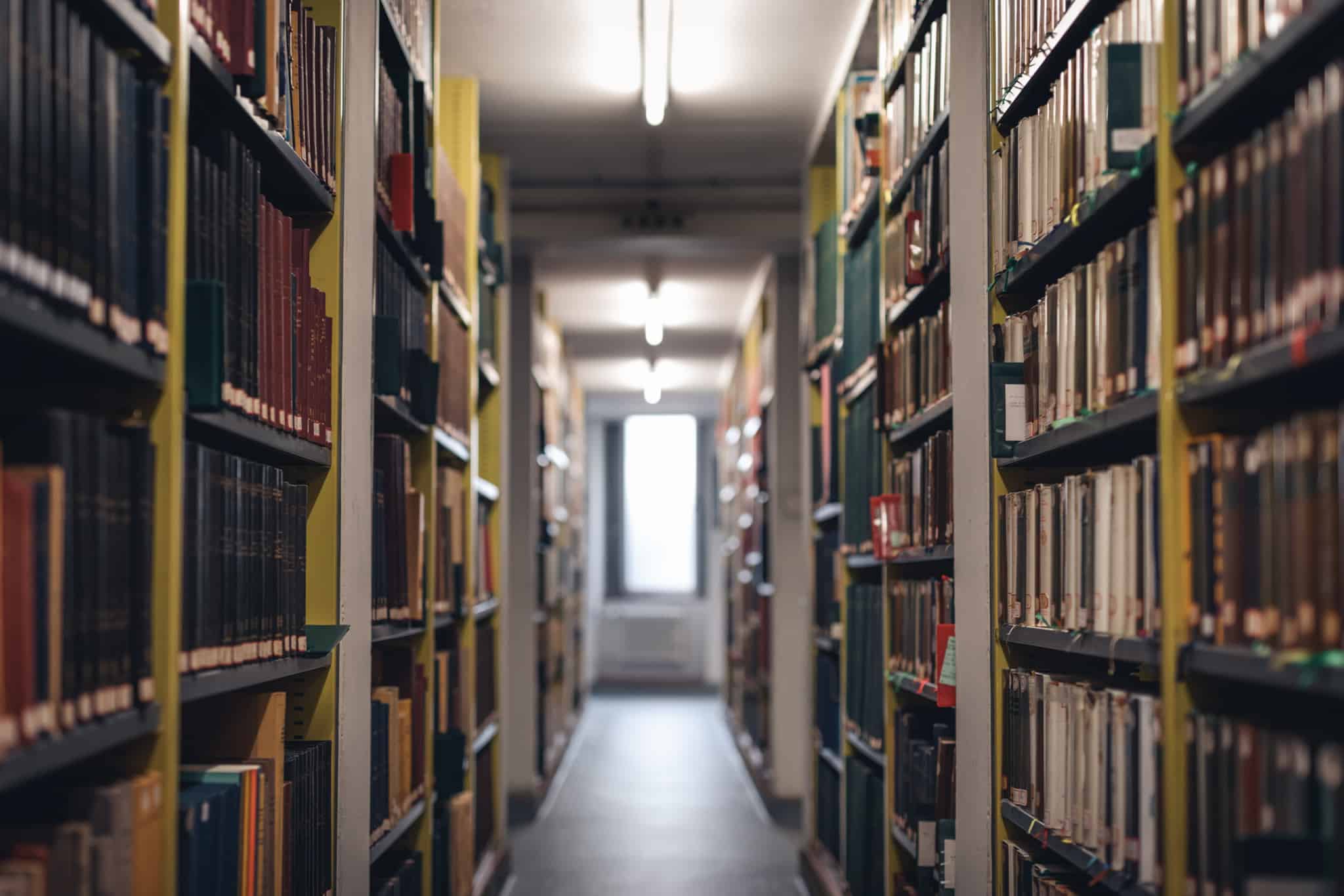
As the saying goes, “prevention is better than cure”. This principle also applies to heritage collections. Optimal storage conditions, regular condition assessments and careful monitoring of the collections’ environment all help minimise the risk of deterioration.
Preventive conservation encompasses all measures and actions aimed at protecting heritage collections by managing their immediate environment. Its goal is to prevent, or at least minimise, any damage or loss over time.
Remedial conservation
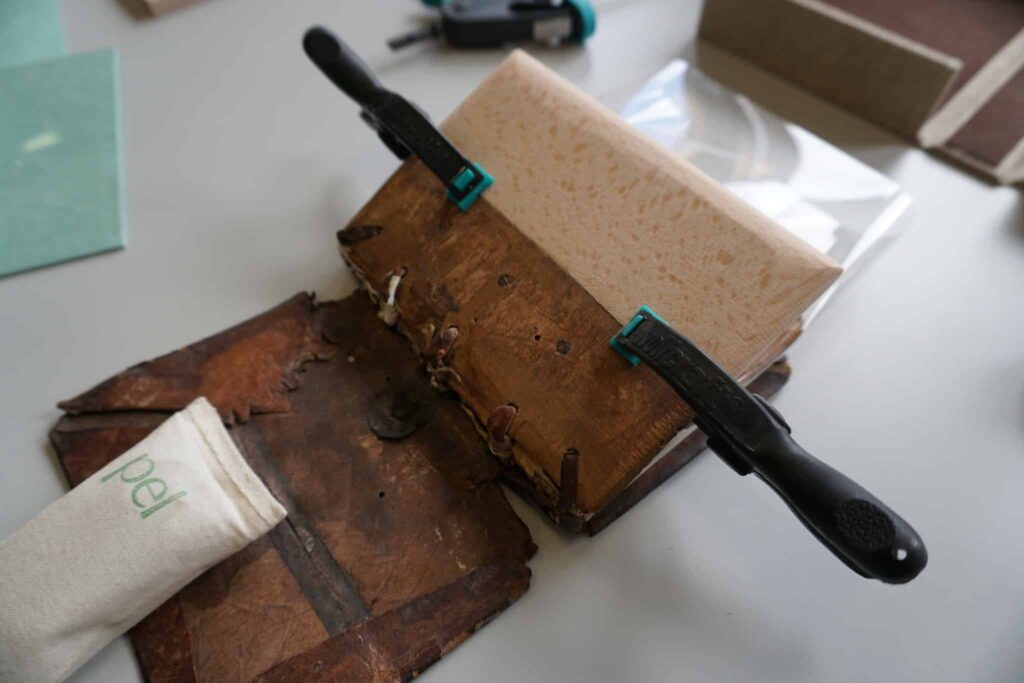
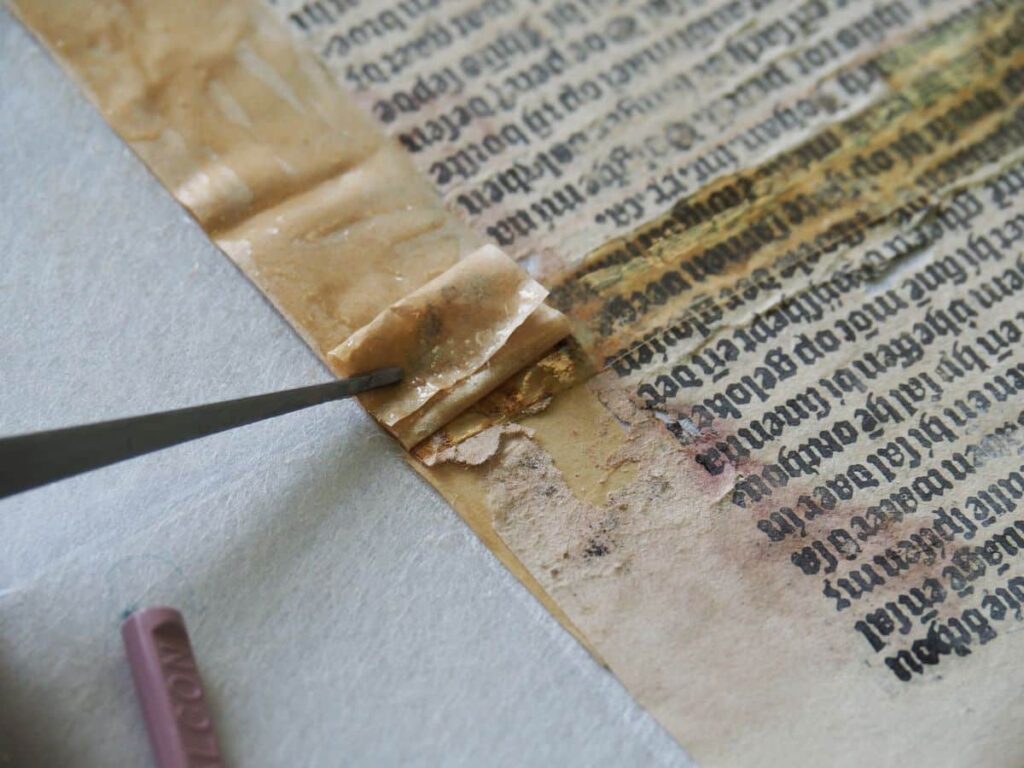
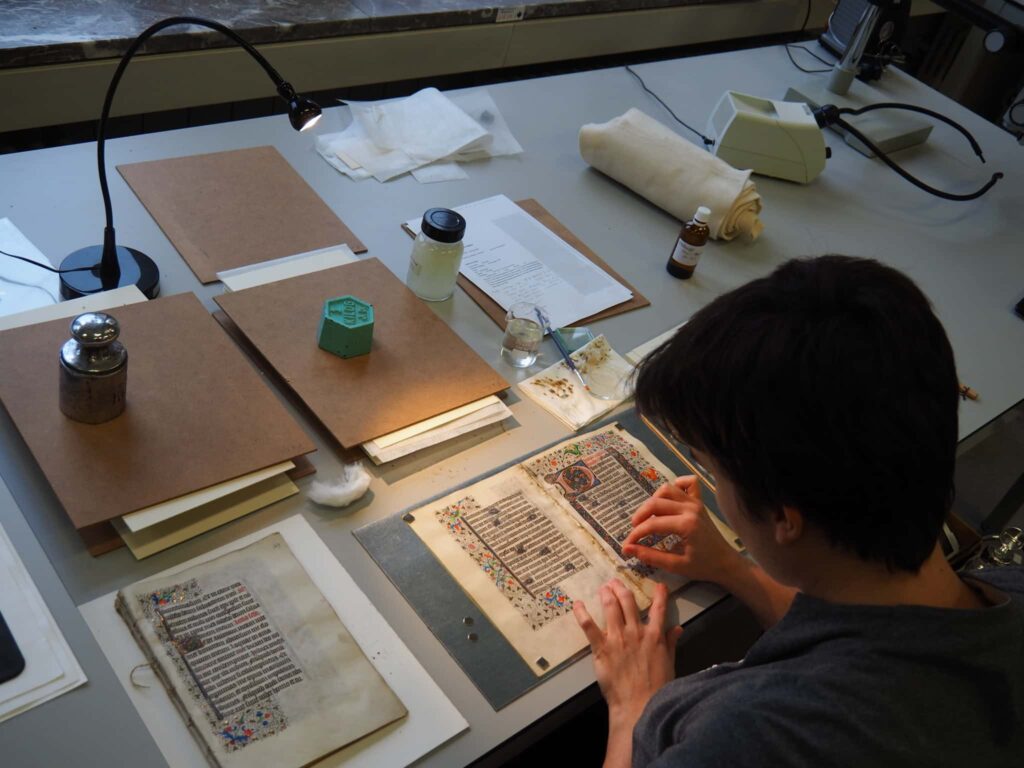
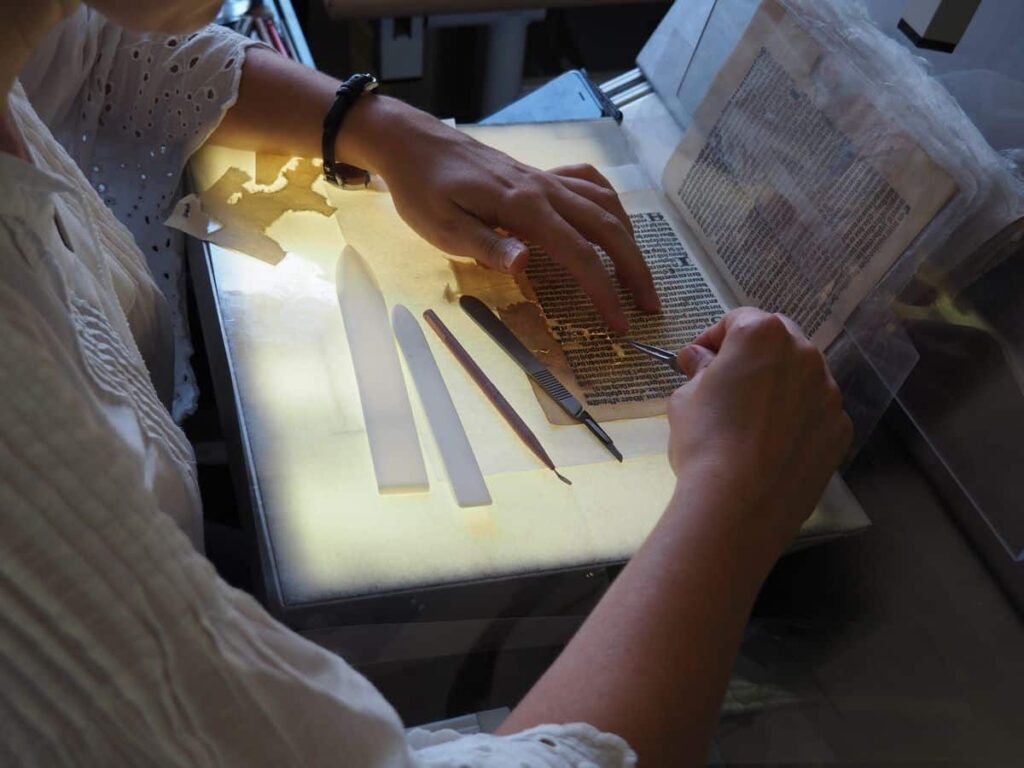
Some items are already damaged when they enter our collections, such as the famous “Rijmbijbel” by Jacob van Maerlant. In these cases, preventive conservation alone is not enough. These damaged objects are entrusted to our restoration workshop, where specialists determine the most appropriate treatment. This stage is known as preservation (also referred to as remedial conservation). It involves interventions on heritage collections to halt ongoing deterioration or strengthen the physical structure of the documents.
Environmental and logistical measures
KBR protects its collections on several levels, through both environmental and logistical measures and the preventive conservation of its documents.
1. Control of the environmental conditions
Temperature, relative humidity, light exposure, cleanliness and the condition of storage areas all influence the preservation of collections. These factors must be continuously monitored and assessed to prevent deterioration, as they can interact with one another in ways that increase the risk of damage. Such risks include the spread of pests, the growth of mould and the acceleration of chemical deterioration.
2. Appropriate storage furniture
3. Treatment and intervention equipment
In addition to storage areas, dedicated spaces equipped for a range of conservation activities are essential. These include rooms for dust removal, areas where protective enclosures and exhibition supports are made, quarantine rooms, and so on.
4. Measures adapted to the collections
- Protective housing: Ensuring the long-term preservation of a collection requires appropriate storage and display conditions. At KBR, particular attention is paid to dust removal, the creation of protective housing (such as acid-free boxes, cases and folders), and the preparation of items for exhibition (including mounts and window mats) to safeguard patrimonial collections. The goal is to protect the items without directly intervening on them and avoid, or at least minimise, their deterioration.
- Continuous monitoring: Monitoring for potential infestations and carefully inspecting storage areas allow us to implement the necessary emergency measures to eliminate any causes of deterioration.
- Maintenance and damage control: Regular inspections of storage areas help detect potential problems at an early stage. Basic conservation measures or minor repairs to documents can sometimes help slow down their deterioration.